
Cervical spine pain can affect the neck, shoulders, and sometimes the arms. Causes vary, and a specialist evaluation can help determine what may be contributing to symptoms.
At EndoNeuroSpine, care plans are based on imaging, overall health, and whether a minimally invasive or endoscopic option may be appropriate for a given diagnosis.
What Causes Lower Back Pain?
Lower back pain can result from various factors, including:
-
Muscle strain
— due to poor posture, heavy lifting, or sudden movements -
Disc problems
— such as herniated or degenerative discs -
Spinal stenosis
— narrowing of the spinal canal -
Arthritis
— age-related wear and tear in the spine -
Lifestyle factors
— prolonged sitting, lack of exercise, or obesity -
Injuries
— from accidents or sports activities
Common Symptoms
Lower back pain can present in different ways, such as:
- A dull or sharp pain in the lower back
- Pain that radiates to the legs (sciatica)
- Stiffness, especially in the morning
- Difficulty standing or walking for long periods
- Numbness or tingling in the legs
- Reduced flexibility
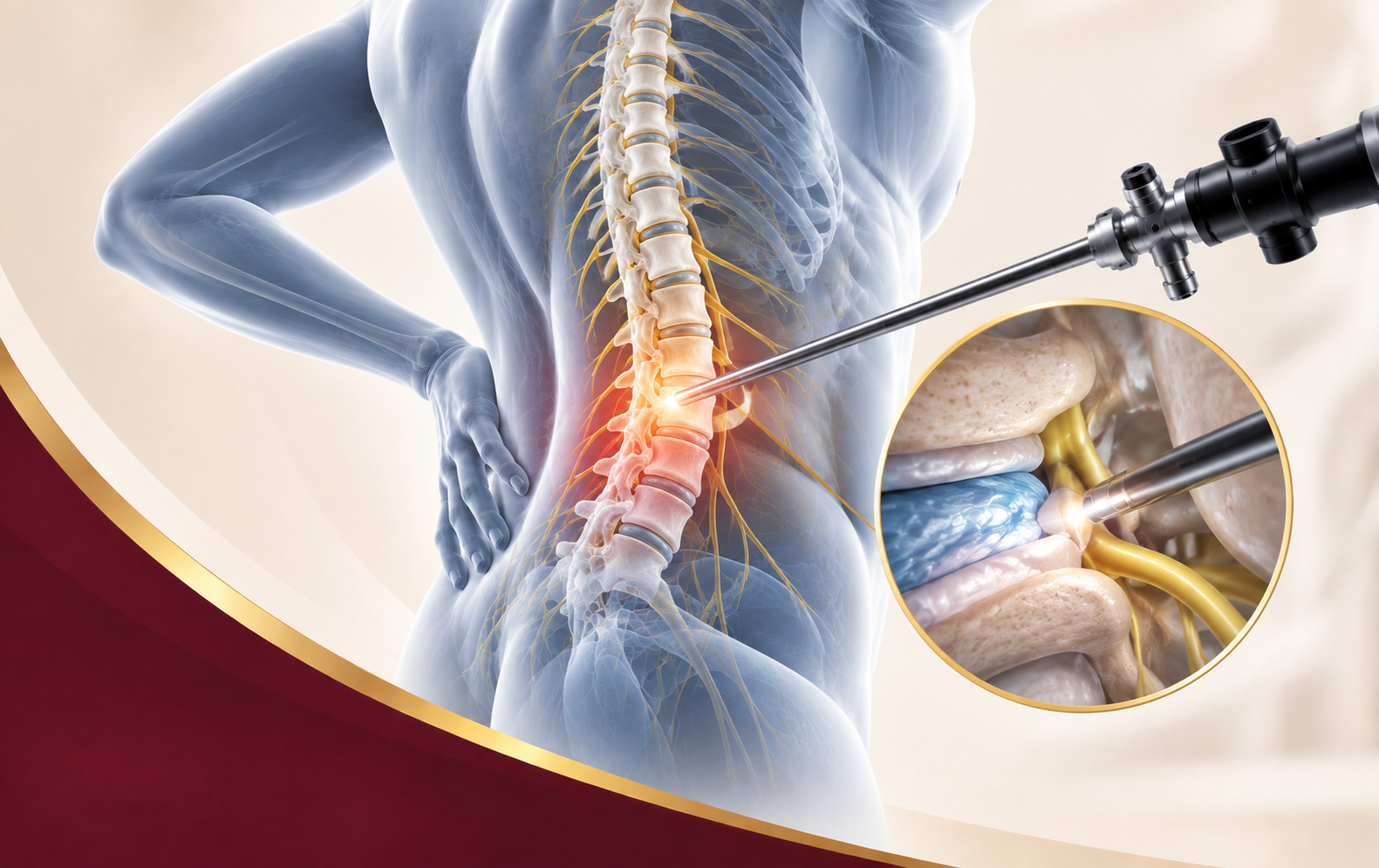
Modern Treatment Options
Treatment depends on the underlying cause and severity of the condition. Options may include:
Conservative Care
Medication, physiotherapy, and lifestyle changes.
Minimally Invasive Procedures
Selected endoscopic techniques where clinically appropriate.
Pain Management
Targeted treatments to help manage symptoms and support function.
Surgical Solutions
Surgical approaches may be considered for selected cases when clinically appropriate.
When to See a Specialist?
If your back pain persists for more than a few weeks, worsens over time, or is accompanied by numbness, weakness, or difficulty walking, it is important to consult a spine specialist. Evaluation helps determine the underlying cause and appropriate treatment options.