EndoNeuroSpine
About the procedure
What Is Endoscopic Spine Surgery?
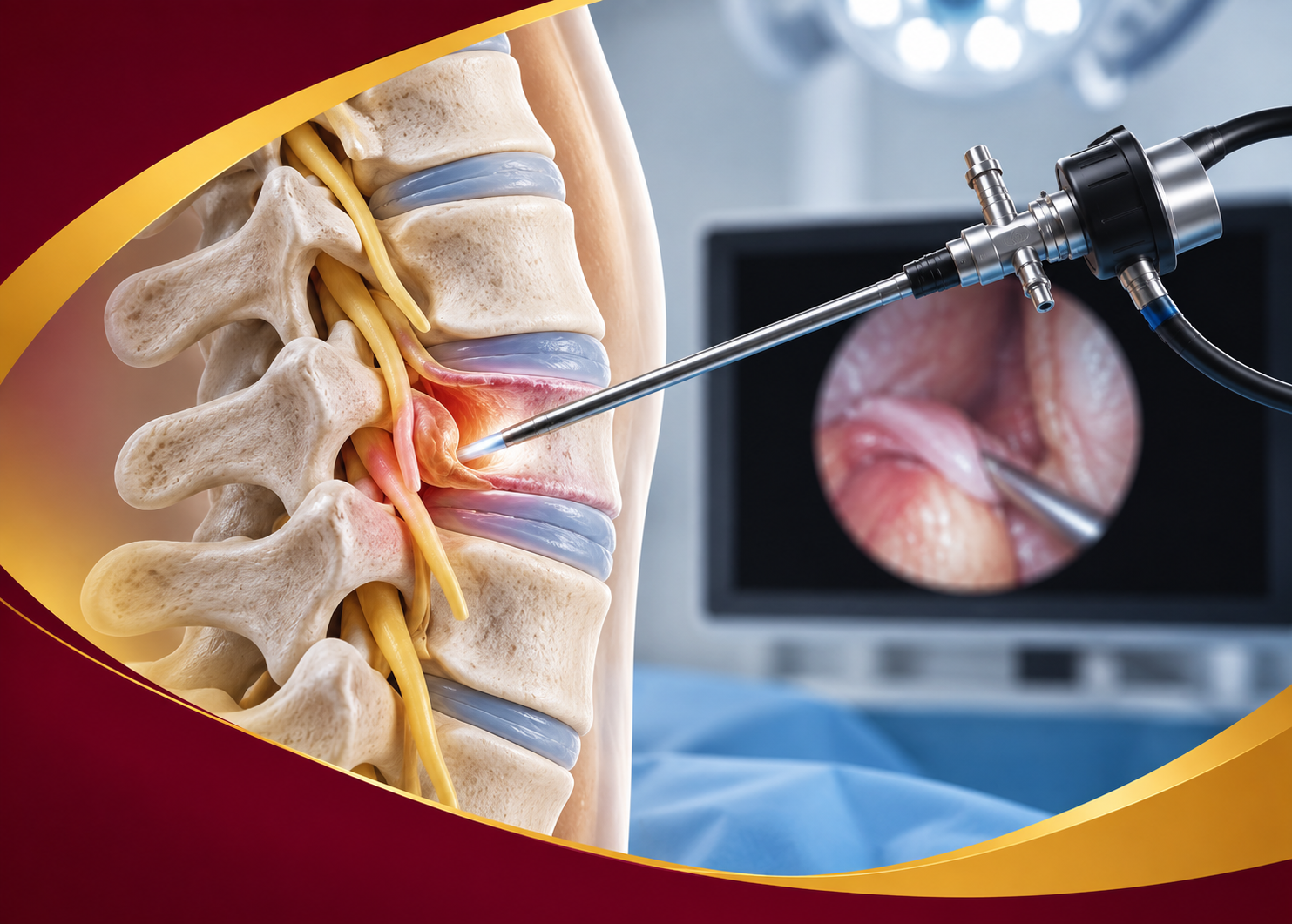
Endoscopic Spine Surgery is a minimally invasive technique that uses an endoscope and specialized instruments to access selected spinal conditions through a small working corridor.
The camera can provide a magnified view of the treatment area so the surgical team can see spinal structures while working through a smaller access point than some traditional open approaches. Suitability depends on imaging, symptoms, and a specialist’s evaluation.
Conditions we treat
Conditions Treated with Endoscopic Spine Surgery
Endoscopic Spine Surgery may be considered for selected spine conditions following appropriate clinical evaluation.
Spinal Stenosis
Nerve Compression
Degenerative Disc Disease
Foraminal Narrowing
Other Spine Conditions

Key benefits
The Minimally Invasive Advantage
Potential benefits may include the following, compared with traditional open approaches in appropriately selected cases:
Smaller Incisions
May support a smaller surgical footprint than some traditional open approaches.
Less Pain
Can help reduce tissue disruption for some patients, though discomfort still varies.
Faster Recovery
Some people return to light activity sooner; only your clinician can estimate a timeline.
Better Outcomes
The goal is a plan that may support function and comfort, based on your individual case.
Your treatment journey
How Endoscopic Spine Surgery Works
We follow a personalized approach based on your condition, symptoms, and clinical needs.
1
Consultation
Review symptoms, history, and questions with a specialist.
2
Imaging & Diagnosis
Use imaging and clinical findings to understand the spine condition.
3
Treatment Plan
Discuss whether an endoscopic corridor may be suitable for your case.
4
Procedure
If surgery is advised, treatment uses a small corridor and visualization.
5
Recovery & Support
Follow a written recovery plan and ask before increasing activity.
Our technology
Advanced Visualization for Safer, More Precise Treatment
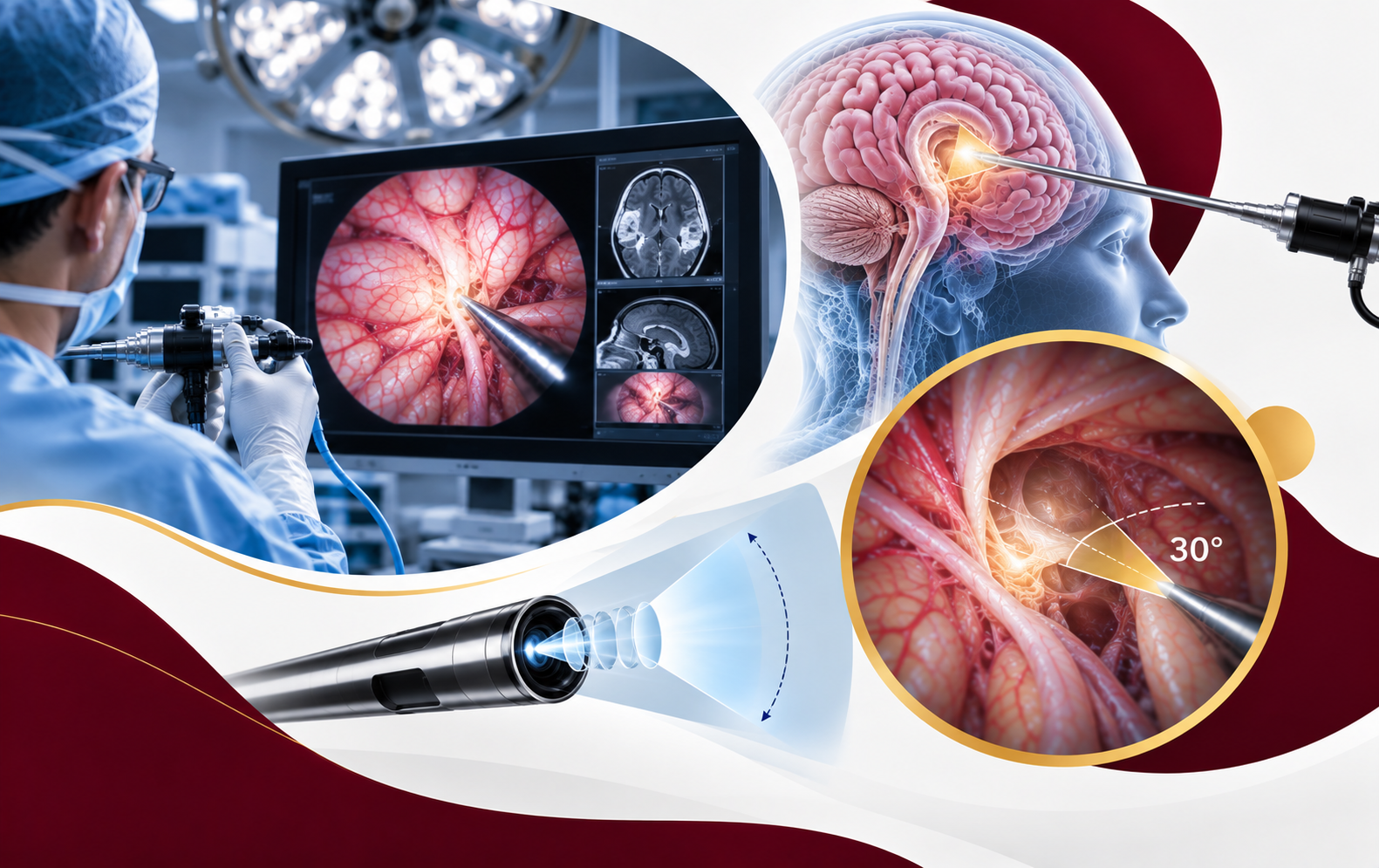
Endoscopic spine surgery depends on what the team can see through a small working corridor. A high-definition endoscope, including 30° angled visualization where it applies, is designed to provide a wider and clearer view of spinal anatomy than a straight-on look may allow.
That view can help the team identify nearby nerves and discs, plan a corridor, and work with more visual information. Suitability still depends on imaging, diagnosis, and a specialist’s evaluation. All procedures have risks.
-
High-Definition View
Magnified HD images can help the team see fine detail inside a confined working space.
-
30° Angled Lens
Where used, the angled lens can show around anatomy that a 0° (straight-on) view may miss.
-
Deeper Corridors
Illumination and visualization through a small corridor may support work in selected deep or confined areas.
-
Careful Navigation
Clearer sight lines may support careful handling of nearby tissue. Outcomes still vary from person to person.
 30°
30°
Recovery & results
What to Expect After Treatment
Recovery varies by procedure, condition, and individual patient factors.
Short Hospital Stay
Potentially same-day or next-day discharge depending on the procedure and clinical circumstances.
Gradual Recovery
Return to activities according to individual recovery guidance.
Activity Guidance
Personalized advice for a safe return to work and daily activities.
Long-Term Relief
Follow-up care focused on recovery and functional improvement. Relief is not guaranteed.
Frequently asked questions
Your Questions, Answered.
Here are some common questions about endoscopic spine surgery. If you have additional questions, please contact our team.
Candidacy depends on symptoms, imaging, overall health, and prior treatment. A specialist consultation is needed to determine whether an endoscopic spine approach may be appropriate.
It is an established technique for selected spinal conditions. All surgery has risks. Your care team should explain expected benefits, possible complications, and alternatives for your situation. No procedure is risk-free.
Duration depends on the condition, the levels treated, and intraoperative findings. Your specialist can discuss a typical range for your planned procedure. This page does not list a fixed time.
Return to work, exercise, and daily routines is individual. Follow the written plan provided after treatment and ask the clinic before increasing activity.
No. Anatomy, diagnosis, prior surgery, and overall health can mean another approach is safer or more effective. Your specialist will explain alternatives when an endoscopic option is not advised.
Take the next step toward precise spine care
Your Spine Deserves Careful Planning.
Request a consultation to review imaging and discuss whether an endoscopic spine option may be appropriate.