Age-Related Disc Degeneration
Disc flexibility can change with age, which may increase the chance of herniation in some people.
Overview
A brain tumor is a mass of abnormal cells in or around the brain. Growths may be benign or malignant, and they can cause symptoms by pressing on nearby structures.
Location, size, and how the tumor behaves all influence symptoms and which options may be discussed after imaging and clinical review.
Endoscopic approaches may be considered for selected tumors when a less open corridor is appropriate. Suitability is individual and is never assumed from website information alone.
Healthy Disc
Herniated Disc
Causes & risk factors
Several factors can contribute to the development of brain tumors, including:
Disc flexibility can change with age, which may increase the chance of herniation in some people.
Repeated load or lifting strain may add stress to lumbar discs.
Prolonged flexed or unbalanced posture may increase load on the lower spine.
Higher body weight can increase mechanical load on lumbar discs.
Smoking may affect disc nutrition and tissue health over time.
Family history may contribute to disc-related conditions in some people.
Common symptoms
Symptoms can vary depending on the size and location of the herniation.
Diagnosis
A thorough evaluation helps determine the likely cause of your symptoms and the most suitable next step. This may include:
Your clinician reviews symptoms, activity, and examines the back and legs.
Strength, sensation, and reflex findings can help localize nerve involvement.
MRI or other imaging may be used when clinically appropriate to review disc and nerve anatomy.
Daily activities and goals help shape a plan that fits your situation.
Treatment options
Treatment depends on the severity of symptoms, clinical findings and the underlying cause.
Medication
Physiotherapy
Activity modification
Lifestyle changes
Epidural injections where appropriate
Nerve blocks where appropriate
For selected patients when clinically appropriate
May be considered for selected complex cases
Why endoscopic treatment?
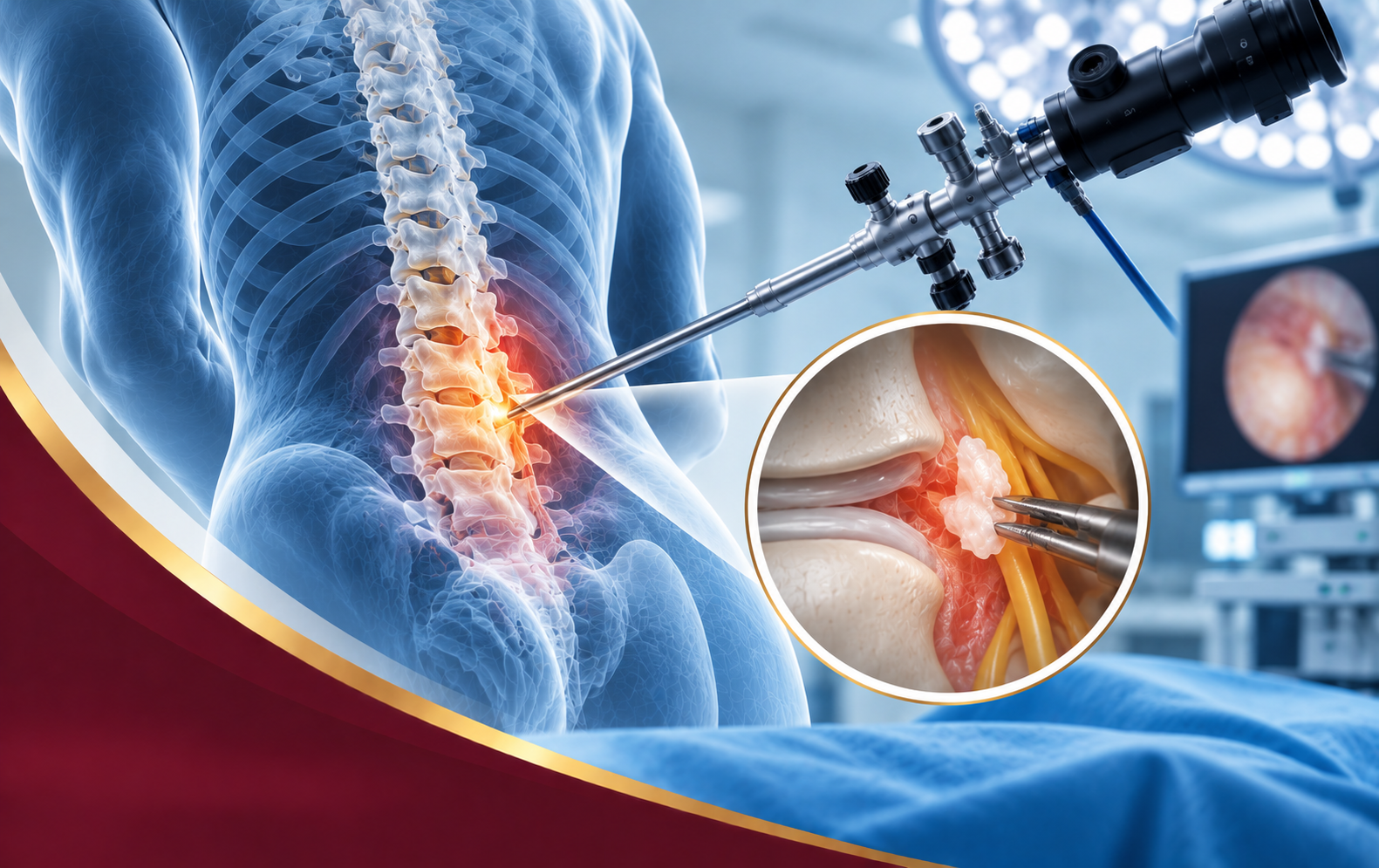
Endoscopic spine techniques may allow selected disc problems to be treated through smaller access points. They are designed to limit disruption of nearby tissue. Suitability depends on imaging, symptoms, and overall health.
Potential benefits may include:
Frequently asked questions
Here are common questions about brain tumors. If you have other questions, please talk with the clinic. This information does not replace a personal medical assessment.
Age-related disc change is a common contributing factor. Strain, load, smoking, and family history may also play a role. A clinician can discuss what may apply after reviewing your history and imaging.
Some herniations improve with time and conservative care. Others need further treatment. Only a specialist can advise after examining you and reviewing appropriate studies.
Recovery varies by person, symptoms, and the type of care used. Your clinician can outline an expected timeline after evaluating your case. This page cannot predict individual recovery.
Surgery may be considered when symptoms persist, neurological findings are concerning, or conservative care is not enough. The decision depends on examination, imaging, and your overall health.
Many people return to usual activities after an appropriate plan, but timing is individual. Follow the written advice given after your evaluation and ask before increasing activity.
Take the next step toward clarity
Request a consultation to review imaging and discuss whether an endoscopic option may be appropriate.